


20 years through the eyes of our employees
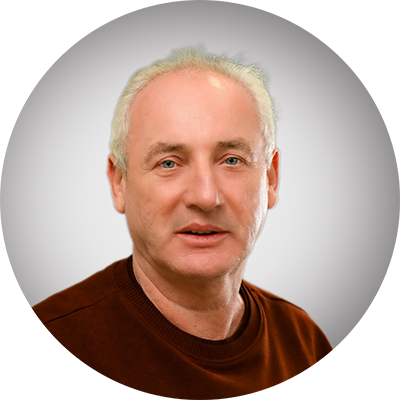 |
Ľuboš Cibulka |
When Ľuboš Cibulka started working at the power plant in 1983, after graduating from a secondary technical school, the world of computing looked completely different from what it does today. Computers took up entire rooms, users had to reserve “machine time” in advance, and printers were large machines that hummed away somewhere in the server room.
Do you remember your first day on the job? How did you get started?
After graduating from a secondary technical school in 1983, I started working as a technician at the computing centre. At that time, preparations were still under way for the operation of Unit 2 of the power plant, and a new computing centre was under construction at the same time. My work focused mainly on external devices—barcode scanners, printers, and disk drives. These devices were used, for example, to process payroll or print material records.
At that time, there were also terminal workstations at various locations within the power plant. Users had to reserve so-called machine time in advance to be able to work on the computing equipment. When payroll was being processed, we often worked two or three shifts, and we frequently stayed overnight when something needed to be recalculated or corrected.
How did your work gradually change?
A major change came with the arrival of personal computers. These began to be widely deployed throughout the power plant—along with printers, scanners, and monitors. Gradually, they also made their way into the operations departments, to the maintenance foremen. My colleagues and I formed a service team responsible for technical support. We had a company car and would drive around the site to resolve users’ issues. Our job was to respond as quickly as possible so we could help them and keep work moving forward.
The founding of JAVYS was a turning point. How do you remember that time?
A major change took place in 2006, when Slovenské elektrárne was split up and JAVYS was established. At that time, a new server room was built, new computer equipment was purchased, and new operating systems began to be implemented. Since I knew this environment well and worked with people who had known me for many years, I moved to the new team along with several colleagues. The beginnings, however, were not easy. New management arrived with high expectations, and many things had to be handled very quickly. It was a major challenge.
Can you recall a moment that was particularly challenging?
One such moment, for example, was when the company’s management moved to Bratislava. Over the course of a single weekend, we had to move and set up all the computer equipment so that when people came to work on Monday morning, everything would be up and running. Situations like this require good organisation and teamwork.
Technology has changed significantly over the years. In what ways, specifically?
The difference is enormous. In the past, many things were in paper form; today, most processes are digitised. We can look up information quickly, and communication is much easier. However, technology is constantly evolving. New operating systems, new applications, and new devices are constantly emerging. That’s why you have to keep learning new things.
What has kept you at this job for over 20 years?
There were moments when I thought about leaving. In the end, however, two things always won out—a great team and work that I enjoy.
When you give someone a new computer after six or seven years and see how happy they are, it’s such a nice little feeling. I like to say that I play Santa Claus even in the summer.
What role does the team play?
A big one. We have a great group here and we can rely on each other. If I don’t know something, a colleague helps me—and vice versa. We also know each other on a personal level and know a lot about one another. This collaboration is very important.
Do you think the company culture has changed?
Definitely. We used to hang out more often outside of work. There were various get-togethers where we’d chat and have fun. Today, the pace of work is faster, and there are fewer opportunities like that. Sometimes there’s a Christmas party, or we meet up with colleagues for a beer, but the old days had their own charm in that regard.
Is there still something you enjoy about this job?
Definitely. New technologies and new equipment are constantly coming out. When new equipment arrives, it’s not even properly unloaded yet, and we’re already unpacking it and checking out what’s new. It’s similar to getting a new cell phone—you’re naturally curious about what it can do.
Where do you think the company will be in ten years?
I think it should continue to be a leader in the field of decommissioning of nuclear installations. We have the technological infrastructure and experience that need to be utilised. At the same time, I believe that nuclear energy still has great potential in Slovakia and will remain an important part of the energy sector in the future.
What advice would you give to new colleagues?
Don’t be afraid of hard work, and don’t give up at the first sign of failure. When you’re given more tasks or have to solve a problem, that’s when you learn the most. Practice is the best teacher. There are many things you don’t learn in school—you simply have to experience them.
What would you wish for the company on its 20th anniversary?
That it be able to fully utilise its potential. We have experienced people, technology, and know-how. We need the courage to move forward, collaborate, and tackle new challenges.