


20 years through the eyes of our employees
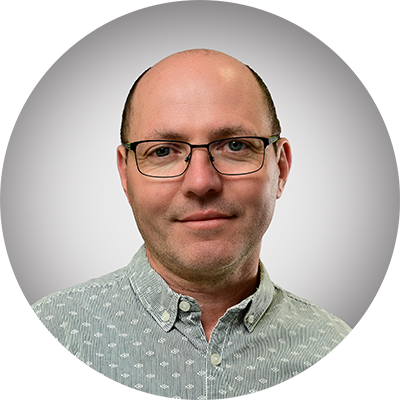 |
Martin Slezák |
For more than two decades, he has been involved in the decommissioning of the A1 nuclear power plant—from the earliest projects to today’s technologically complex solutions. Martin Slezák talks about responsibility and respect, as well as how the handling of radioactive waste is becoming a meticulously managed process with an emphasis on safety and the environment. In this interview, he discusses the key moments of his career, technological developments, and the values that, in his view, determine how successfully we can close the nuclear chapter of our past.
Do you remember your first day at the company? What is the first thing that comes to mind? What was your very first responsibility back then?
Before JAVYS, a. s. was established, there were challenging years of organisational changes and its gradual transformation from Slovenské elektrárne. It was founded as a subsidiary under the original name GovCo, a. s., where I worked from 1 June 2006 as a nuclear power plant safety analysis technician—radioactive waste (RAW) treatment—in the strategy and project preparation department for the decommissioning of the A1 NPP. I had 12 years of experience since 1994 in the operation of the liquid radioactive waste (LRAW) purification plant in Building 41 at the A1 nuclear power plant (NPP), first as an LRAW treatment technician, and later as a process engineer for the active water treatment facility. From 2006 I worked in the project team and managed the decommissioning project for the A1 NPP – Stage I. My first assignment was to manage the decommissioning of the active piping systems at the A1 NPP. It was a new experience for me to directly influence the implementation schedule; I was responsible for ensuring compliance with nuclear, radiation, and conventional safety standards, and especially for environmental protection during the decommissioning process.
What were the first few months like after the company had been established? What was the most challenging part? Can you recall any specific details—a room, a meeting, or a phrase that stuck with you?
When I signed the acknowledgement of receipt of the notice from Slovenské elektrárne, a. s. regarding organisational changes dated 27 February 2006, I had some concerns. The notice stated that, by decision of the Board of Directors of SE, a. s., as of 15 March 2006, a branch of Slovenské elektrárne, a. s. – Decommissioning of Nuclear Power Facilities and Management of Radioactive Waste and Spent Fuel – had been established. Subsequently, this new plant was separated from Slovenské elektrárne as of 1 April 2006 and transferred, together with its employees, into the organisational structure of the new company GovCo, a. s. The following day, 28 February 2006, GovCo, a. s., informed the new employees that all rights and obligations arising from the employment relationship at Slovenské elektrárne would be transferred as of 1 April 2006 to the new employer, GovCo, a. s., without any changes. This was followed by the signing of new employment contracts with GovCo, a. s., effective as of 1 April 2006, thereby finalising the change of employer, which was the predecessor of today’s JAVYS, a. s. Despite initial concerns, this challenging process went smoothly from the employees’ perspective, and no one lost their job. On the contrary, there was plenty of work involved in building the new company, which was a positive development.
How did you feel when you started, and what did you think lay ahead? Was the atmosphere more one of excitement or uncertainty?
Working at a new company and in a new workplace was a challenge for me, involving new, higher demands for precision, thoroughness, and personal growth. I needed to acquire knowledge and a certificate in project management, as well as professional competence in public procurement. It wasn’t easy, but I was glad to be able to contribute to the decommissioning of the A1 nuclear power plant. I remember how, during a conversation about these demanding tasks of decommissioning the A1 NPP, my supervisor quoted the rule of St. Benedict: “Ora et labora”, which
encouraged monks in Benedictine monasteries to find a balance between work and rest. In other words, as the proverb goes: “Keep order, man, and order will keep you”. I consider this to be key to managing the demanding professional and personal tasks in a person’s life.
Which moment or project from those 20 years are you most proud of? Why that one in particular?
Over the years, I have participated in numerous investment and operational projects across Stages I, II, III, and IV of the A1 NPP decommissioning. Among the most significant projects in which I have actively participated, or continue to participate, is the Groundwater Monitoring and Remediation Pumping system, which was put into operation in 2000. Other completed projects include the renovation of HVAC systems for the main reactor building of the A1 NPP, construction of Building Structure 30/A for the handling of large-scale metal components from A1 NPP decommissioning, and the ongoing project to prepare and construct workstations for the decommissioning of the KS-150 reactor.
Was there a moment when you realised that we were doing something truly exceptional or historically significant?
Yes, for me, it was exceptional when, in 2013–2014, I directly managed the decommissioning of the original building structures of the A1 NPP on the premises of Jadrová energetická spoločnosť Slovenska, a. s. (JESS, a. s.). Subsequently, we succeeded in obtaining approval to exempt them from the scope of the Atomic Act for unlimited use via Decision of the Nuclear Regulatory Authority of the SR No. 1146/2013. We then formally handed over the vacated site to JESS, a. s. on 2 September 2014. This was the first step in removing the site from the scope of the Atomic Act following its decommissioning.
What has changed the most in your work over the years—technology, processes, the team, or the pace?
Thanks to scientific and technological progress, there have been significant innovations in operational technology processes, measurement and control, and management processes and procedures. Today, we can monitor and analyse material properties with much greater precision, and we can remotely and robotically control decommissioning processes in inaccessible areas. For example, in 2017, I managed a project to reconstruct a gamma scanner for radioactive waste (RAW) in drums at the Bohunice RAW Treatment Centre (BRWTC), where a robotic column manipulator was deployed to handle the drums, which significantly streamlined the workers’ tasks. Today, however, we are at a turning point where the processor—the “machine”—is acquiring its own consciousness, and there is concern about how this will affect its creator—humanity itself. That is why we should be cautious in this area.
Working in the field of nuclear installation decommissioning carries a great deal of responsibility. How do you personally view this?
In the process of decommissioning the A1 nuclear power plant, the most important thing is to keep a cool head and think comprehensively, taking into account the impact of this activity on people, nature, and the landscape. These topics dominate our project team in the A1 NPP decommissioning section, and they are deeply ingrained in our minds.
What do you think the public should know or understand better about the work we do? What would you like people to associate with our company’s name?
It is important for the public to know that in our company, we carry out all activities with respect for the environment and the people who live in it. Safety comes first, not profit.
What values do you think are most important for our company?
Responsibility, communication, teamwork, decency, and hard work. Half-jokingly, but also seriously, I sometimes tell my colleagues that we should work hard enough to earn today’s pay. 😊
What has kept you here for 20 years? Was there ever a moment when you considered a change? What always made you decide to stay? Is it more about the work or the people?
At JAVYS, I feel right at home, but I’m still learning—sometimes even from my own mistakes. There was a moment when I considered leaving our company to join the private sector, but in the end, the argument that I would never be able to use the nuclear experience I’ve gained over the years won out, so I remained loyal to my company.
How has the corporate culture and atmosphere changed from the early days to today? What would you carry over from the past into the future? What was typical of the “old days”?
Between the 1960s and 1980s, safety culture was not at the level we know today. From the end of operations at the A1 NPP until the start of its decommissioning, a great deal of high-quality work was done, though occasional non-systemic errors did occur. Legislation was not perfect, and different limits applied. At JAVYS, the quality of procedures and management has gradually improved since the company’s establishment, while criteria for assessing the environmental impacts of decommissioning have become stricter. This process has also led to an increase in work pace, productivity, and efficiency, which is why it is important to constantly monitor the optimal distribution of the workload across individual departments. At the same time, it is necessary to keep in mind the company’s overall direction and its position and mission in the Slovak Republic, as well as in the European context.
Is there anyone or anything that has significantly influenced you over the years?
Over the past 31 years, I have worked with many people who have had a positive influence on me. Some, unfortunately, have already passed away, but they will remain in my heart forever. However, there is one person who has been and remains the most important to me, and thanks to whom I have been able to handle even the most demanding professional and personal challenges over the past few decades. That person is my wife, who provides me with a stable family life and is my rock.
How has working at the company shaped you—professionally and personally?
Over the years, I have gained a lot of experience that has shaped me and continues to do so to this day. I have a special connection to the environment and value any effort aimed at protecting it. Over the years, I’ve realised that teamwork is essential and that good work can only be done within a good team with strong relationships. I believe that the safety culture in our company is only as strong as the sense of responsibility for a job well done that each and every one of us employees carries in our hearts.
If you had to describe those 20 years in one word, what would it be? Why?
“Respect”. It takes years for a person to understand that even though they have learned many things, they are still at the beginning of complete knowledge, which they will never fully attain. We are constantly on a journey, even within our company.
Where do you think the company will be in another 10 years? What do you think will be the biggest challenge? Will young colleagues work differently than you did when you started?
I believe that we will see qualitative progress in the areas of decommissioning, waste management, and, in particular, the release of materials into the environment. The challenge lies in properly configuring processes in light of the gradual tightening of criteria for the release of materials into the environment, given the limited waste storage and disposal capacities within Slovakia. Young colleagues, unburdened by history, should respond flexibly to the tightening criteria in this area. I believe they will not lack enthusiasm in doing so.
What would you wish for JAVYS on its 20th anniversary?
A permanently stable place and position for JAVYS in our country as it fulfils the irreplaceable tasks of radioactive waste management. 26 April 2026 marked 40 years since the nuclear accident at the Chernobyl Nuclear Power Plant. I wish for our company, JAVYS, that we never witness such a tragedy in Slovakia.
And what message would you like to convey to the new colleagues joining us today? What can this job offer them?
I wish for our new colleagues to keep an open heart and mind in building a sense of responsibility, which will gradually teach them to make the right decisions not only at work but also in their personal lives.